The home of everything related to Twin Navion and Camair aircraft
Alaska has always been a haven for people seeking to escape the hustle and bustle of urban life. Adventurous, ambitious, industrious, and independent the inhabitants of
Alaska have long been known for their ability to scratch an existence out of an inhospitable land.
Since the first pilots began flying in Alaska in the 1920s, the airplane has been a vital part of transportation; delivering mail, food, freight, and medical assistance.
Even in the post-war period the Civil Aviation Authority was either unable to watch for, or turned a blind eye to many questionable aviation activities.
In the 1950s a ingenious Alaskan by the name of Robert Kamery began experimenting with his single engine Navion, N8787H, taking advantage of his remote local to try
modifications that would have been unheard of in the rest of the United States. He called it, the Kamery Tigiaouk.
At first, he wanted to try making his plane into a twin. To do so he built a new wing center section, to which he bolted the original Navion's wings. This four-piece
wing followed the same general design as the North American T-6 and Douglas DC-3. It also increased the wheel track by five or six feet. Power was supplied by two
6-cylinder, inline, inverted Ranger engines. No details were known about the aerodynamic nose cone created for the forward fuselage.
Two other major modifications were performed during this time. The two engines needed more fuel so a pair of homemade tip tanks were fabricated and installed. The owner
also wanted a more conventional cockpit with a fixed roof and car-like entry door. To accomplish this he riveted the canopy closed and cut a large opening in the port
fuselage side. This resulted in the destruction of the fuselage's main structural supports. A door was built and installed, and the vertical stablizer lengthened.
Unable to cure a series of cooling problems with the Ranger engines the owner abandoned the idea of a twin and installed a Continental radial (possibly obtained from a
Stinson or WACO). The round engine and its cowling were blended into the fuselage with large sheet metal fairings.

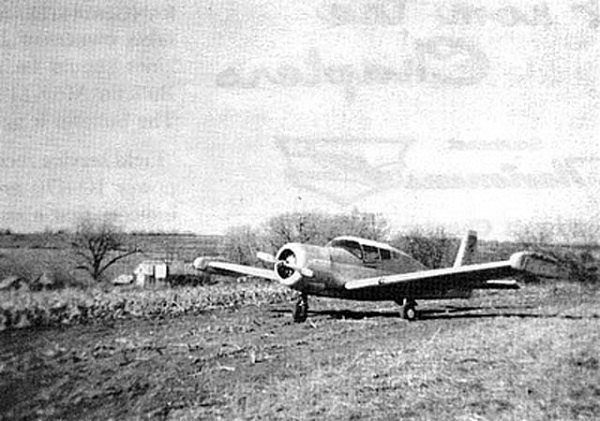
Seen with its third engine configuration in Alaska.
Photo courtesy of American Navion Society, December 1976 newsletter
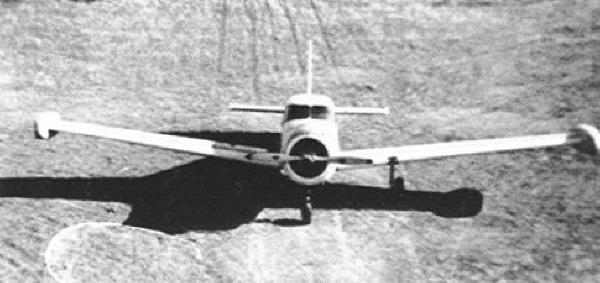
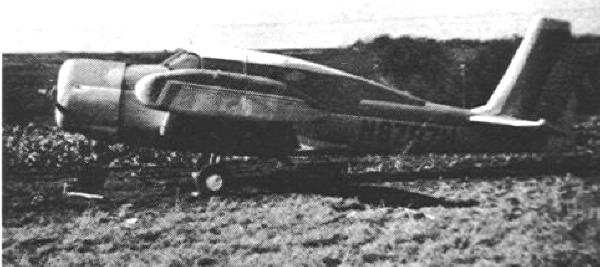
Two additional views of this unique Navion.
Photo courtesy of EAA Sport Aviation, April 1971 via Walter K. van Tilborg
Eventually the owner moved south to Clay center, KS, bringing his radial powered Navion with him. Naturally the FAA refused to grant a certificate of airworthiness and the
airplane sat disassembled in storage. Several attempts were made to sell the remains, and in the end the fuselage yielded only a very small number of spare parts before
being scrapped in the 1990s - thus ending the bizarre story of this mysterious Alaskan Navion.
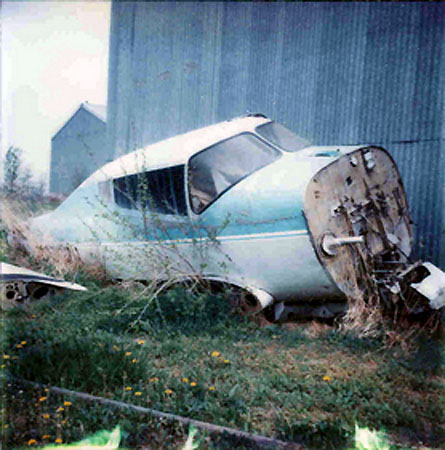
Its remains sat disassembled for years in the lower-48.
Photo courtesy of Gerry Stauffer